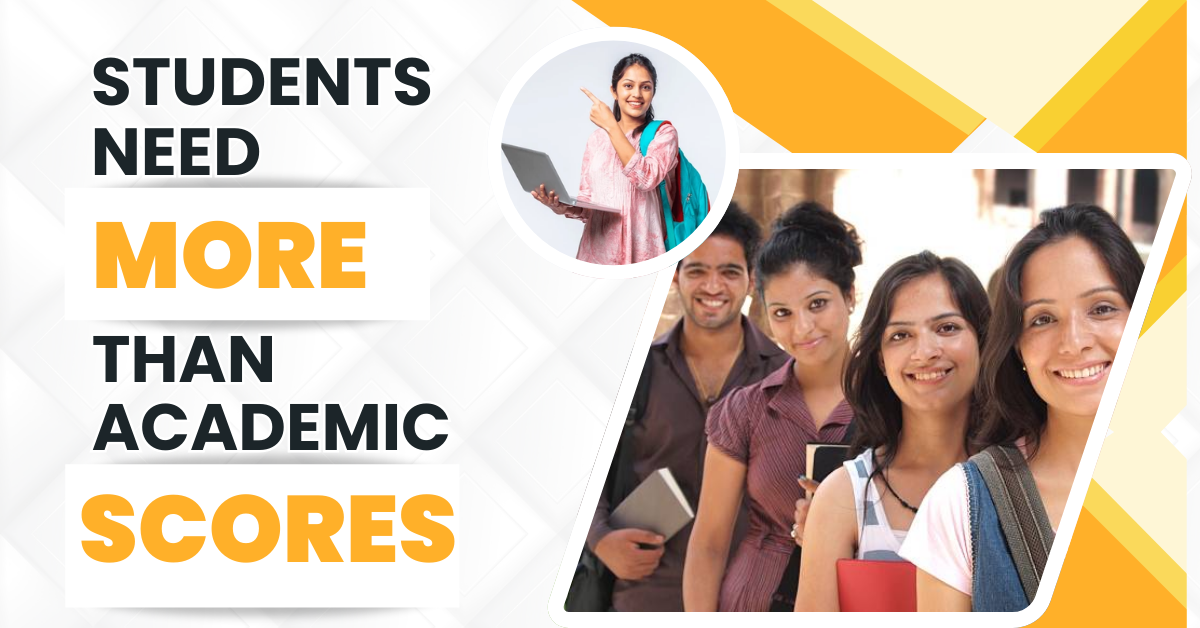
Academic scores have been considered the ultimate measure of a student’s success for a long time. High marks often decided college admissions, career paths, and future opportunities. However, the realities of today’s job market tell a very different story. Employers are no longer impressed by marks alone. What they seek are professionals who can apply knowledge, adapt quickly, and solve real problems. This shift has made the idea of skills with a degree more important than ever before.
In India, the growing gap between academic learning and workplace expectations has led to an urgent focus on employability. Students, parents, and educators are now recognising that strong academic performance must be supported by relevant skills to create job-ready graduates who can thrive in competitive industries.
Table of Content
Why Academic Scores Alone Are No Longer Enough
The modern workplace demands far more than theoretical understanding. Employers want candidates who are not only knowledgeable about their respective subjects but who also communicate clearly, collaborate effectively, and think critically. Many graduates struggle during interviews and on the job because their education focused mainly on exams rather than application.
This challenge is especially visible in engineering and technology fields. Despite having degrees, many graduates lack essential engineering student skills such as problem-solving, coding proficiency, analytical thinking, and project experience. As a result, companies invest significant time and resources in retraining new hires.
This reality highlights the growing importance of combining academics with structured skill development.
The Rise of Skill-Based Hiring
Hiring practices are evolving across industries, and recruiters are increasingly assessing candidates based on what they can do, not just what they know. Skill-based interviews, practical assignments, and portfolio evaluations have become common.
Companies now prefer industry-ready students who can contribute from the first day. This includes:
- Strong communication and teamwork abilities
- Hands-on technical skills
- Real-world project exposure
- Adaptability to new tools and technologies
- A mindset focused on continuous learning
Graduates who possess these qualities stand out, regardless of their academic scores.
The Role of the New Education System
India’s new education system is gradually shifting towards holistic learning. The emphasis is moving from rote memorisation to critical thinking, creativity, and practical application. This transformation aims to align education with industry needs and future career demands.
Under this evolving framework, institutions are encouraged to integrate internships, experiential learning, interdisciplinary studies, and skill-based assessments. This approach ensures that students graduate with both knowledge and capability.
The focus is clear. Education must prepare students not just to pass exams, but to succeed in real-world environments.
Skill Development in India and Its Impact
The importance of skill development in India has gained national attention. Government initiatives, private institutions, and industry partnerships are working together to enhance employability across sectors.
Skill development helps students to :
- Bridge the gap between theory and practice
- Gain confidence in professional settings
- Understand workplace expectations early
- Build adaptability for changing job roles
- Improve long-term career growth prospects
Students who invest time in skill development alongside academics are better positioned to become job-ready graduates with sustainable career paths.
Engineering Education and the Need for Practical Skills
Engineering education, in particular, demands a strong balance between theory and application. While fundamentals remain important, employers expect graduates to demonstrate real competence.
Key engineering student skills that employers value include:
- Programming and technical tool proficiency
- Analytical and logical thinking
- Project management and teamwork
- Exposure to industry tools and platforms
- Ability to learn and apply new technologies
Institutions that prioritise hands-on learning produce industry-ready students who adapt faster and perform better in professional roles.
Next Gen Education and Future Careers
The concept of next-gen education focuses on preparing students for future roles and not what worked in the past. Emerging fields such as artificial intelligence, data science, cybersecurity, automation, and cloud technologies are reshaping career opportunities.
To succeed in this environment, students must develop:
- Technical skills aligned with future industries
- Strong problem-solving and innovation abilities
- Digital literacy and adaptability
- Communication and leadership skills
A degree supported by future-focused skills offers long-term relevance and career stability.
Skills With a Degree Create Career Confidence
Students who graduate with skills and a degree enjoy several advantages. They are more confident during interviews, perform better in entry-level roles, and adapt quickly to organisational demands. Employers trust such candidates because they demonstrate readiness, not just qualifications.
This approach also benefits students who aim to pursue entrepreneurship, higher studies, or global career opportunities. Skills make education versatile and empower graduates to explore diverse career paths.
How Quad AI School of Technology and Management Aligns With This Approach
Quad AI School of Technology and Management reflects the growing demand for skill-focused education in India. The institute integrates academic learning with practical exposure to help students become industry-ready rather than exam-focused graduates.
Quad AI offers a four-year computer science program with a strong emphasis on emerging technologies such as artificial intelligence and machine learning. The curriculum encourages application-based learning through live projects, coding practice, and industry-guided assignments. This approach helps students develop essential skills alongside academic knowledge.
The institute also promotes early internships and real-world experience, enabling students to understand professional expectations while they study. By combining technical training, soft skill development, and placement preparation, Quad AI supports the vision of creating job-ready graduates equipped for the demands of the modern workforce.
Conclusion
In today’s competitive environment, academic scores alone are no longer enough. Students need skills with a degree to succeed, grow, and remain relevant throughout their careers. The shift towards skill-based learning, supported by the new education system and national focus on skill development in India, is a positive step towards building a stronger workforce.
Institutions that prioritise practical learning, industry exposure, and future readiness are shaping the future of education. For students, the message is clear. Invest in learning that builds capability, confidence, and adaptability. Degrees open doors, but skills determine how far you go.